• Never Again – Part One

    There’s a strange thing about autistic children even I as an autistic parent had to learn the hard way. Apparently autistic children can be split into two camps: those who can be approached and engaged with like “normal” people, and those whose connection can only be established autonomously. Most people can approach the former, crouch down, say hi, ask what’s your name and start building a bond. The latter is immediately irritated and stressed. And the more you try to build a bond, the more the child shuts down.

    These children cannot even be described as anti-social or shy at all. And they often appear to be okay to the untrained eye. But inside, they are in panic. They cannot interpret the social cues that come with active bonding. They see that someone wants something from them because everything they do seems to be waiting for some kind of response. But what?

    Even writing this I don’t expect anyone to grasp the depth of it. It even sounds like an overreaction when I read it. But apparently, subjecting a child to repeated instances of traditional childcare bonding can be traumatic. Some mask and play along and as soon as they get home they break down. For others it takes weeks. And the child has no other way to say never again other than repeated hysterical meltdowns.

    I didn’t fully realize until the loss of a music therapist, two kindergartens and even family that my autistic son is the latter.

    Apparently…

    This is the story about how many times a child has to say “Never Again” until the adults get it. Including me…

    I am a late-diagnosed autistic father of an autistic four-year-old son. As a child, I was the opposite of him. I went toward strangers. I spoke to everyone. I had no sense of stranger danger. My son is the exact opposite, and that is part of why it took me so long to read him. I had no internal map for what was happening. I had to learn him from the outside, the way someone learns a language they didn’t grow up speaking.

    My son doesn’t like to be approached, touched, or engaged with beyond a brief hello or a quiet acknowledgement of his presence unless he is the one who initiates. He’s not shy at all. Not even a little bit. And it’s not a phase either. It is the fundamental condition under which his nervous system can tolerate the presence of an unfamiliar person at all. This of course varies with the intensity, energy and duration of the interaction. But generally speaking, when his conditions are honored, he eventually approaches on his own, and the bond he builds is unusually deep. When that condition is violated, he shuts down. Not only that, but his nervous system takes a serious hit. And the cost is paid for hours or even days afterward, at home, in ways the violator never gets to see.

    But there were also people in his life that got it right the first time. Some because they were just effortless humans. People that generally don’t try hard to be at all. And they didn’t try hard to bond. Others were expert practitioners that knew things I didn’t. The intentional way they approached my son was invisible to me. That is until I collected enough data to see the pattern. The “I see what you did there” effect wouldn’t come until years later.

    The SPZ Practitioner

    The first practitioner experience set a high bar I would rarely see again. She was highly professional, slow, still, and hyper present. She never approached my son. She observed. My son felt right at home. He explored, he touched everything. She let him. And set boundaries when he went too far. He respected them. The whole interaction was light. Unspectacular. If it was a class, the students would probably leave without taking notes. Literally nothing happened. And that was the whole point.

    While we were there I info dumped. She listened without even a hint of fatigue. She paused after my monologues, I had a lot to dump. And she not only responded to everything I said, but validated with detail. She would complete my reports with details I didn’t even know were relevant. She told me I was unusually informed, that some moments she felt like she was talking to a colleague. After years of struggle with clinicians, this was exactly the kind of validation I needed. She took me seriously. She was intelligent, observant, empathic and competent, but never once referenced her credentials. Her very presence was the credentials. This would prove to be the exception, not the rule.

    She observed both of us. She must have been exhausted after we left. Me info dumping, my son exploring her office, her tracking both of us at once. And you could tell she didn’t miss a thing. My son spoke about her for days. Weeks. He would just spontaneously say, “She’s so nice.” And I immediately knew who he was talking about.

    The Music Therapist

    The first session at music therapy was the opposite of everything that had just worked. The therapist came in filled with enthusiasm. She immediately started trying to engage with my son. He pushed back hard. I tried to explain that her approach wasn’t landing. She told me how much she’d worked with autistic children. I got this. This was the rule to the exception I mentioned before. Every good experience happened in the absence of credentials. Every bad one with an announcement thereof.

    Nothing worked. At some point she was visibly disturbed by the fact that her magic didn’t work on him. To her credit, she humbled herself. The whole session became just me and her talking. I didn’t know what I was dealing with yet, but I felt my son. I explained to her what I was sensing. Not because I fully understood myself, but because I could feel what he was feeling in that moment. I spoke as if I’d seen this before. I hadn’t. She listened, and she changed her approach.

    A few visits later I asked my son if I should leave the room. He said yes. That was a good sign. The bond was forming. But something wasn’t right. I wasn’t in the sessions after that, and I didn’t trust her self-reports enough to ask. I knew the answer would be “everything is fine.” That’s just what I was used to from everyone. So I didn’t even try.

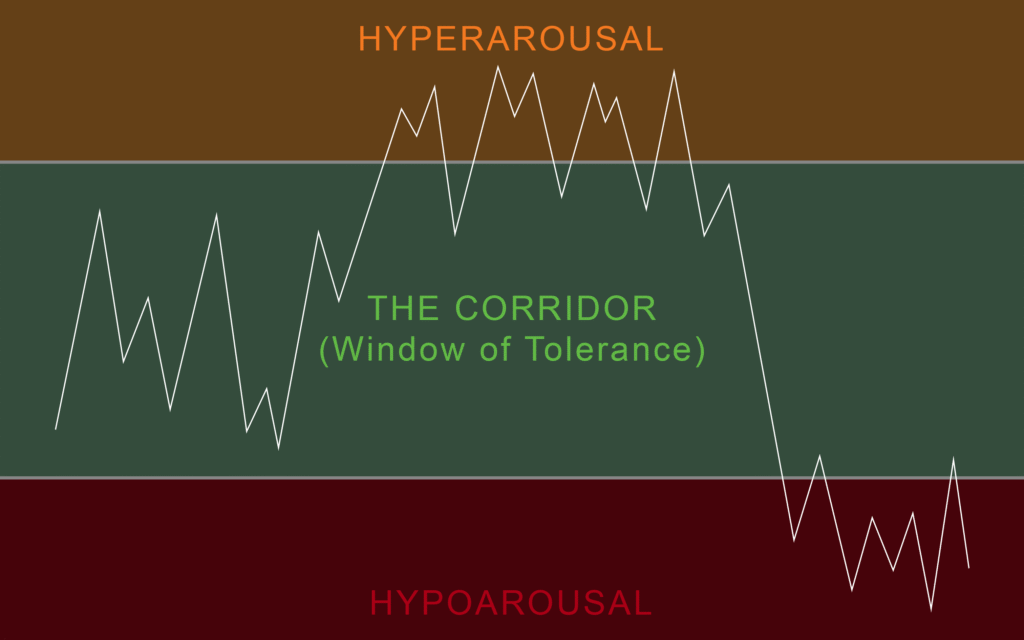
    But many times when I came back in, my son didn’t feel grounded. He felt like he was coping. He was in a hyperactive mode I’ve seen many times. The mode he goes into when he’s trying to escape a situation or setting. That isn’t how he is. I don’t see it in any other context. When my son feels things is out of his control, he either goes up or he goes down. He gets almost hysterically hyperactive, or he shuts down completely. My guess is that the therapist over-structured the sessions. She led too much. She undermined his autonomy.

    My son has an internal clock. He always knows what’s going to happen, at what time, and on what day. He thrives on that predictability. But predictability isn’t the same thing as control. He needs both. Structure from the outside, autonomy from the inside. When the structure starts dictating the inside too, he loses his footing.

    His eventual response was to sabotage his sleep the night before therapy. It took me weeks to pattern-match that. He’d had sleeping issues in the past, but I hadn’t connected these to anything specific. But once I realized it was happening every week on the same night, I asked him about the therapy. He said he didn’t want to go anymore. So we paused the sessions at first. I eventually asked him about music therapy and he told me with wide open eyes: I never want to go back there. So I cancelled them altogether.

    But this was only the beginning. The hard lessons were yet to come.

    The Studio

    At some point I was miserable. My son wasn’t in kindergarten. I had him 24/7. My whole life’s purpose was to function for him. All of my hyperfocus activities were incompatible with us. I couldn’t play cello, I couldn’t draw, I couldn’t code. Resentment started to grow. I knew I had to do something for me. So I restarted a hobby I’d dropped years ago when my equipment got stolen: photography.

    I started slow, with TFP shoots with people from my neighborhood. Just to see how my son would respond. He loved it. Subjects came in and engaged with me. My son observed. When he’d gathered enough information he approached them on his own terms. He made friends. Had his favorites he would talk about for days after they left. I always told him when I wanted to shoot. Always asked him if it was okay. It was always okay. He always looked forward to the next one and always asked me who was coming. When he heard the name of a favorite he jumped for joy.

    These days were not about my son. They were about me. Just me. I’m not an over permissive parent, but I started to raise my son to speak for himself. I struggled with this sleep sabotage and other behavioral expressions that were so extreme, and took so long to decode, that I started teaching him to express his needs verbally. Just so I could hear them now instead of feel them later. He gets to tell me no. He gets to tell me I’m or something is getting on his nerves. He gets to tell me when he doesn’t want to do something. I intentionally give him the feeling that he has the power to shape his environment. And I signal to him that I respect his needs first. Understand them later. But for photography days I told him, these aren’t the days where he gets to shape the environment to his will like he usually does. He doesn’t get to take the subjects into his room and kick me out. He doesn’t get to be the center of attention. He was always okay with that. If I didn’t shoot on a weekend, he’d express his disappointment.

    So here he was. Strangers in and out of the house every week. Then twice a week. Depending on the energy, my son would just peek his head out of his room and observe, or walk right up to a person and ask “who are you?”. Sometimes he would come and sit next to the makeup artist while we shot. Talk to the models when we took breaks. And sometimes I had to make boundaries when he tried to command the room. But he never said never again.

    The Family

    In order to protect the identity of the family in this story I’m going to refer to them as George and Steph. Imagine them as Uncle and Aunt or Grandfather and Grandmother.

    Before both George and Steph visited together, George came alone. It worked. He arrived, sat on the couch, and talked to me. My son observed from across the room. At some point he approached, took George’s hand, and pulled him into his room. I was not allowed in. That was the signal. The bond was forming on my son’s terms.

    I don’t know exactly when that changed. There was no single moment. When both came together, the room was different. More energy, more attention, more bodies oriented toward him. They followed him when he moved. They touched him. They hovered. I saw how he responded but I didn’t think much of it. I had enough data to explain so I tried. I told them what to do and what not to do. I think they tried at first. But it wasn’t consistent.

    What I didn’t see in the room was how much it was costing him. My son was masking. He appeared to be managing. He wasn’t protesting, wasn’t melting down. But he did start migrating to me instead of sending me out of the room. To everyone in the room, including me, he looked fine. I didn’t yet know the difference between my son tolerating a situation and my son being okay in one. That distinction only became visible after they left, when he said, “I’m so glad they’re gone.”

    That sentence shocked me. I tried to talk to him about it but he didn’t have the vocabulary to help me understand. I didn’t think it was all that serious but I could tell it was all just a bit too much for him. So I told them that he needed more space. But I didn’t push the matter. I had the instinct but I didn’t yet fully understand, and without that I couldn’t hold the line.

    The pattern only became visible later, the same way it had with the music therapist. The next visit was weeks or even months later. But apparently the last visit stuck in his mind deep enough that my son sabotaged his sleep before they came. By this time I had an idea why he did it. So I asked him, he said: “I never want them to come back.” I was immediately dysregulated. Here I had my son that had just verbalized his needs, absolute and undeniable. And family that had travelled hundreds of kilometers and even brought the great-grandmother to meet him for the first time. The pressure was enormous. So I talked to him. Tried to negotiate a way that could somehow salvage the visit. I already knew why he said it, so I asked if one of them could come instead of both. He said yes. That confirmed what I already suspected. It wasn’t personal at all. It was the load, the social pressure, and the lack of autonomy.

    I tried to explain this to the family. I wrote it out carefully. I described the pattern, referenced the music therapy, explained PDA and what worked on the shooting days when five adults were in the room and none of them engaged with him and he thrived. I explained that the path to closeness was through distance. That he needed to observe until a person became predictable, and only then would he approach. On his terms.

    What came back was not engagement with any of it. George’s response centered on the inconvenience, the travel, the hotels, the effort, and said the great-grandmother would probably never be able to come back. Steph, who I thought I got along with and who definitely loved my son, said she wouldn’t come alone. And George was stuck between the both of us. He said if he came alone, his wife would be angry. I believe that was the actual shape of the problem. It was that the adults around him couldn’t reorganize themselves, even slightly, to meet the conditions his nervous system required. But nobody was calling it for what it was. So I did. Big mistake.

    I thought the request was simple. Come one at a time. Do not follow him. Let him lead. These were the same instructions I gave babysitters, kindergarten staff, and therapists. Some followed them and built a bond with him in a single afternoon. The family couldn’t get there. Not because they didn’t love him. Because their love had a shape that couldn’t bend, and his needs required bending. But not only that, I made the mistake of telling them what my son said. And that hurt.

    My son doesn’t reject people. He rejects conditions. When the conditions are wrong, he protects himself the only way he can. First with masking, then with sleep sabotage, then with words. By the time he says he doesn’t want to see someone, he has already exhausted every other strategy. That sentence isn’t the beginning of a problem. It is the end of a long chain of signals that were not read.

    His family heard that sentence as rejection. They reacted to their own pain. And in reacting to their pain, they stopped seeing him entirely. More accurately, they stopped seeing me.

    You see, the reoccurring theme in all of the stories that go badly is that I am the messenger for a child that cannot send the message himself. What nobody can see is that all of this is absolutely overwhelming for me. I’m often just as shocked as they are. And I don’t always do a good job communicating the situation to them while having to hold space for my son here, where they don’t have eyes. But they kill the messenger every time.

    Theo

    Then there’s Theo. The child who taught me how to bond with my own son on the deepest level.

    My son bonds with adults faster than with other children. He can read them better. Their signals are clearer. Children he watches like an animal on guard. This time it was the other way around. Theo is the son of a friend. They came over and Theo immediately started mirroring my son. Everything my son did, Theo did. Everything my son said, Theo said. My son was immediately intrigued. They did this for what felt like forever. It made Theo predictable for my son. And it was the kind of play that preserved his autonomy, because he was actually in control.

    After that day I started doing the same. It deepened our bond to a whole new level. It has become part of our day. We parrot each other all day, every day. My son also doesn’t like when I lead play. I still do it because I’m always testing the boundaries of how to engage with him. In those moments he will start looping scripts. He senses the loss of control. I respond by echoing his script back to him. At that point he immediately exits the loop.

    This taught me that mirroring is a way to show him you are with him. Not just that he is leading. But that he matters. I don’t always conform to him. Sometimes I let him sit with the discomfort of not being in control. That is just as important. The boundary is safety. Feeling like he isn’t in control of a situation and feeling unsafe are two different things.

    The Kindergarten Part 1

    My first time taking my son through the process of finding a kindergarten was a devastating experience for me. One that left me questioning my competence as a parent. Everyone I asked beforehand said the same thing: at the first visit, you’ll mostly be left alone with your child. It wasn’t that way.

    From the first moment on the integration practitioner was right between me and my son. In all the hours we were there she never left his close proximity but once for a few minutes. She narrated, offered, suggested, got down to his level and stayed there.

    I predicted the entire outcome of the visit from the beginning. Based on the environment, her vibes and my son’s cues, I already knew what would happen. I told her that I would name his signs as they emerged. Each time I did, her response was a different version of the same thing. That’s normal. That’s fine. Each phrase took the thing I had just said and softened it into nothing. My predictions updated constantly based on that. And I knew he was going to pop at some point.

    The first outburst came over a toy. Seemingly out of nowhere. Everyone in the room turned their heads, she was in shock. I tried to explain that the toy wasn’t the issue. He was manifesting built up tension on the object with the closest proximity. But I didn’t even get half the sentence out before she interrupted me with a yeah yeah and turned her head away. That was the moment I stopped talking. The visit was a runaway train.

    I was tracking my son, who was dysregulating in ways she couldn’t read. Tracking her, who was reading me as an overinvolved parent. Tracking myself, trying not to overcontrol, trying to hold the line between being present for him and pulling him out of the room by being too present. There was no quiet corner. No exit. No person I could turn to who would simply hear me.

    Like many autistics, my entire life is built on scripts. Every failed situation that moved too fast for my neurology has been studied and analyzed post mortem. With each recurring situation I’ve iterated on scripts that help me handle them firmly, confidently and gracefully until they lead to favorable outcomes. But I had no tools for this, no rehearsed scripts. So I did nothing at all.

    As soon as we got outside the front door my son froze, looked up at me, and said, Papa, I’m not okay at all. That sentence doesn’t usually come from him directly. He has a sequence he runs through first. He tries his own strategies, and only when those fail does he reach for me. That day he skipped the whole sequence and signaled to me, he needs me to help him. I told him, I know baby. I’ll take care of you. We went home and did a well practiced cooldown routine.

    A few days later they wrote to say they didn’t think we were a good fit. I wrote back to explain the situation from our perspective but they never replied.

    For weeks afterward, my son couldn’t even hear the word Kindergarten without protesting. The word itself had become a trigger. We stopped looking. The wound would need to heal before we tried again.

    The Babysitter

    My son is conventionally beautiful. He awakens, in adults who meet him for the first time, what I have come to recognize as the “OMG how cute” response. He is kid-model material. People react to him before they have read anything about him at all, because his appearance arrives faster than his behavior. This isn’t a small problem. It is one of the central failure modes I have observed across years of first-contact conversations, and it deserves to be named.

    The cuteness response isn’t innocent. It activates a script in the adult about how to engage with a beautiful child. The script tells them to lean in, to make sounds, to express delight, to touch, to compliment, to perform their own enchantment back at the child. The script overrides whatever the adult might otherwise have observed. It isn’t that they cannot read the signals at all. It is that the cuteness response has already filled the channel before any reading can happen.

    For a high-masking autistic child, this is catastrophic. He registers the adult’s attention as social demand, the proximity as physical demand and the enthusiasm as sensory assault. And because he is cute and visibly sweet, his subtle signals of distress are dismissed. He must be tired. He must be in a phase. The parent must be projecting. He couldn’t possibly be suffering, because he is so lovely.

    The cruelty of this is specific. It isn’t that he is unloved. It is that the love is for the surface, and when the surface starts signaling distress, the love doesn’t adjust. It defends itself. The adult who is enchanted has a stake in continuing to be enchanted, and that stake works against the child’s actual nervous system.

    I have watched this play out so many times that I now intervene before it can. Babysitters get the speech upfront. Most listen. Some don’t. Those who don’t always burn the bridge in the first contact, and only some get a second chance, and only if they listened on the second try.

    I want to tell one story about this, because it is the only kind of story that shows what can change when people can manage to pivot after a first contact goes wrong.

    A woman came to babysit who wouldn’t listen to my upfront explanation. She kept doing the cute thing. She kept reaching for him, talking at him, performing delight. I have learned to recognize the moment before he begins to insist we leave. I saw his signals and tried to explain to her over and over again what was happening. She would pull back for a moment. And as soon as she saw his cuteness again she would have an outburst of delight. My son had his hand gripped around my finger. This is the channel through which I read his nervous system state when we are outside. I could feel his tension rising but she wasn’t getting the message. At some point I had to get loud with her. I stopped and told her in the most unambiguous way I knew how, that if she didn’t start pretending he didn’t exist, I would fire her on the spot. That she could just go home from where we stood.

    She was startled. Her eyes gazed back at me wide open. From then on there was silence. My son’s grip around my finger relaxed as he got a chance to recover. It took about five more minutes to reach the playground.

    When we arrived, I started to explain everything. Quietly, slowly and in great depth. While she sat with what had just happened. My son explored the playground and watched us from a distance. I told her: I am not going to tell you what the moment looks like. But if you respect what I just told you, you will know when it comes. It will be unmistakable.

    A few minutes later, we started to walk around and talk with each other about other things. My son suddenly ran into the grass, picked a flower and brought it to her.

    She crouched down, took it from him with one hand, and touched her face with the other. She looked at me. Almost as if she wanted to cry. From then on, my son spoke to her. I told her to hold her finger toward him. He doesn’t like it when you grab his hand, but when the bond is formed, he will grab a finger on his own. He did. She looked at me again. I could tell how she was holding back her outburst of delight. Now she gets it.

    She told me that she had been so obsessed with his cuteness that she had not seen him at all. But now, she said, she understood. From that day on, she was respectful and intuitive with him. She had become someone he trusted, because she had been willing to stop, sit in the discomfort of silence, and let him approach her on his own terms.

    This is one of the few times an adult course corrected. Even if against her will. She was probably just pausing to form an exit plan. All it took was her being uncomfortable for five minutes. Letting her own enchantment be interrupted. To trust that what looks like rejection of her is actually the only condition under which connection becomes possible.

    The Kindergarten Part 2

    This isn’t the second kindergarten we tried, but it is the second one that went badly. By now I had learned enough to know what my son needed from a first visit. I had learned it the hard way, and I had learned how to explain it clearly. I’d seen enough to be able to pattern match the probability of my son being okay or not. And as soon as I saw enough I didn’t question, I left. One kindergarten I even told within the first 5 minutes we can spare the ceremony, we’re not gonna be a good fit. Not because they did anything wrong, mostly because they didn’t seem to have a tangible integration model. And the ratio of NT to ND children mixed with other factors told me it wasn’t good for my son. If I had to map my pattern matching here for a single one of those rejections, it would be longer than this essay. After all the experience I’d gained, none of that would prepare me for what happened next.

    The first visit wasn’t official. Just the first meet. The staff were occupied with other things. Nobody approached my son. He walked into the garden, looked around, and chose a quiet caretaker sitting by herself. He sat down next to her and started talking. She listened, didn’t ask questions, didn’t lean in, didn’t touch him. Within minutes he had built a bridge I had rarely seen him build that fast. I spoke to the director, the concept sounded great and he was tangibly passionate about this place. It was like it was his baby.

    Days later we came back for the official visit. This time, my son was approached by the autism specialist that immediately crouched down on his level, loud voice, face close to his. The classic enthusiastic approach. He protested on the spot, wanted to leave and never recovered. From then on he was in coping mode. I immediately intervened. My son was used to this by now. If I didn’t, he would have looped verbally about wanting to leave. If I didn’t heed, he would have looped behaviorally. But when he sees me advocate for him he stays. He doesn’t explore freely anymore like at the SPZ, but he stays. And I let it happen in the hopes we could salvage the situation. Boy was I wrong.

    I had explained his profile to her beforehand. I explained it again in the room, multiple times. What he needs: distance, quiet, predictability. What the early signs look like. None of it was respected consistently. And I wasn’t spared of being reminded of her credentials. Of course. When I spoke, she pulled back. Then started a slow approach again. My son still hadn’t recovered from the arrival and she didn’t stop trying to actively bond. But she couldn’t see his distress. What she read as conversation was scripting under social pressure. My son was repeating the same sentences because he could feel something was expected of him but couldn’t figure out what. At some point I moved to the sofa to give him space. He was cornered between two adults. But when I saw him constantly looking over to me I went back and asked her to stop and explained the principle again. At some point she left the room and sent two more back to back with the same approach. I had to start from scratch each time. One of them told me I should probably just let it happen.

    What they saw was a child who appeared to be functional. Until he wasn’t. I watched from the couch as my son escalated and started throwing everything the caretaker tried to offer him. I got up and intervened again. She basically told me in so many words that everything was fine until I came over. I had no capacity to explain to her that his throwing toys is not him saying no. It’s him screaming for help. So I picked him up. He wrapped his arms so tightly around my neck. I immediately knew I let this go way too far.

    What they didn’t see was the same thing nobody ever sees. At home, he broke down, cramping, screaming and crying, repeating “I never want to go back there.” By evening he had eczema across his face that he hadn’t had since infancy. It was the worst meltdown I had witnessed in three years. Days later his body was still telling the story. He wasn’t going to the bathroom. He startled at ordinary sounds. His nervous system had not come back down.

    Their autism specialist called to offer a second visit. I declined and explained what had happened at home. She told me I should have given the team more space, and that building contact with the child was her job. Even after everything I told her, there still wasn’t a single receptor for my message. I ended the call without a single word more.

    We are talking about the same child, same kindergarten. The only thing that changed between the first visit and the second was what the adults intended to do. The first time, nobody had a plan for him, and he found his own way in. The second time, everyone had a plan for him, and he never had a chance.

    AutiCARE

    There’s another story I find interesting and very relevant. Because it shows how effortless it can be to connect with my son.

    We have support personnel from AutiCARE visit us once a week to take things off my hands for a few hours. I will call him Kasey.

    Kasey’s job is usually to handle household chores. He is what I would call an effortless human. He doesn’t try to fulfill his role. He is just simply who he is. Without performance and without additives. He’s extremely slow. I don’t mean intellectually, I mean his whole vibe is low tempo. This lack of momentum is what my son has always been attracted to. And he was intrigued by him from the first moment on. I intuitively chose a different role for him on that day, and took us all for a walk together.

    Kasey became a playmate for my son. He sat down with him once a week and just listened. He didn’t try to add anything at all to the interactions. He clearly didn’t know what. He was just present. What unfolded was a child that dropped his mask bit by bit. A little more each visit. After a few months, Kasey became the only living person who has ever seen my son the way I see him. Without any mask at all. Kasey gets to see all of his stimming, all of his noises, all of his happy scripts and all of his theater. What started as my son setting the tone and doing all the talking is now both of them interacting. Kasey is not a specialist. He let my son initiate and build the whole thing on his own terms.

    You see, my son has his own way of communicating. It’s almost like a secret language hidden in there. You have to observe the pattern. Kasey did exactly that. What they have now is more akin to a duet. Which is exactly what we have. All day long.

    Most caretakers never get here. Even when they manage first contact. But the moment he initiates, they read it as permission to engage. They start leading play, offering, explaining, contributing and steering. They feel as if they would be doing their job badly if they just simply said nothing at all.

    His initiation is not permission to lead. It is permission to follow.

    What they’ve achieved by passing that first threshold is making themselves non-threatening to his nervous system. That matters. But it is not the bond they think it is. It is the entrance, not the room. And any time a caretaker starts leading from that entrance, they are painting over a thing that will never be uncovered again. The bond still forms. But it forms at a ceiling the caretaker imposed without knowing it.

    Kasey never led. Not because he had a strategy. Because he had nothing to add. And that absence of agenda is what let my son take him all the way in. Past the entrance, past the ceiling, into the room where the mask comes off entirely. After everything that has happened, I’m just happy when they don’t assault his nervous system. So I usually don’t lecture anyone about the fact that if they gave themselves permission to be still without subtracting points from themselves, that’s how they would get where Kasey is.

    And Then There’s Me.

    So far this has been alternating stories about who got it right, and who got it wrong. So I think it’s only appropriate to be transparent about my own failures.

    It took me a long time to pattern match my son’s behavioral and health issues onto his interactions. But even after I had that map, it took me even longer to form the scripts that would sufficiently prepare people to receive him on his terms before the fact. I realize especially after The Kindergarten Part 2, that I wasn’t doing enough. Not making the hard boundaries a condition, and requiring acknowledgment before first contact. This essay is one move to change that.

    I have a routine for preparing my nervous system before difficult situations. I plan days ahead. I schedule my sleep with overhead. I supplement magnesium and glycine to give my system room to absorb what’s coming. I do this before meetings with clients, government officials, and sometimes even photoshoots. I never did this once before a kindergarten appointment. I didn’t take care of myself. Getting my son ready early always put him into a mode that takes a lot of energy for me to absorb. My nervous system was never prepared for the days that went badly. Not even a little bit. After that last kindergarten experience, I wasn’t prepared for what happened, and even less prepared for what happened when we got home. We both crashed that day. Hard.

    I’ve explained before how my entire life is built on scripts. The exit protocol is a big part of that. But I didn’t develop them for these situations with my son. I assumed way too often it would be fine. Because it mostly is. But when it goes badly with a kindergarten, the price is always high. Each time things went bad with caretakers I would wing it. I’ve collected enough data to know the signs, and to know when to exit before he breaks down. But without rehearsed scripts, my nervous system freezes. Scripts are the secret survival weapon of every successful high masking autistic. And the exit plan is the backbone of healthy boundaries. A thing many autistics struggle with. Not out of pathology, but because the nervous system is shifted into a sympathetic state. Scripts are the safety net, because recalling checklists and sentences is possible where adaptation isn’t. And I failed to build them for my son.

    I knew enough after the first solo visits with his family worked and the joint visits didn’t. I had the data. But I let the joint visits continue because I was managing the adults’ feelings alongside my son’s needs, and I chose not to intervene hard enough. That’s different from the nervous system prep and the exit protocol. Those are about preparation. This one is about the moment I had enough information to act and didn’t, because the social cost of acting felt too high. That’s the failure that cuts deepest, and it’s the one I think other parents in my position will recognize. I cannot please everyone. And it’s not my job. Protecting my child is.

    All of my previous mistakes compound into the following. Leading to an unpreparedness to hold space for all the well-intentioned people who faced my son and failed.

    Some were ensnared by the trap of pride, to the point of arrogance. It made me angry. I took it personally because I was stuck between two forces. But it’s my personal favorite sin. To gain confidence in your abilities that have worked so many times, then meet that one immovable object that puts you in your place. The reflex to call it an edge case, just to realize it’s more common than you knew. Which in turn calls the very experience you pride yourself in into question. That’s a special kind of pain in and of itself. A pain I know too well. Better than I should. Recognizing myself in them would have helped me do the only thing that actually matters: yield a favorable outcome. Even if that meant executing an exit plan. Yield something that works. Pride is easier to navigate than hostility. Overwhelmed by the situation without a scripted fallback, I defaulted to fight. I fought them until the room yielded to me. An act of shadow boxing myself until we both fall down.

    Others were driven by maternal forces. Deep and pure. Just to hear my son say he never wants to see them again. I don’t think I was wrong to expect they see past those words and see the child behind them. But I didn’t give them a chance to sit with the pain before I demanded it. They did make mistakes. They didn’t heed my words. They underestimated the weight of it all. But so did I. It took me years to grasp it. Rejection hurts deeply. Even if it comes from a child. Especially when it comes from a child. Now when I look back, I wish I’d sat with their pain a bit longer. Let some grass grow over the situation. Given myself a chance to understand it better before I tried to repair it. Maybe he would still have his family.


    In the next chapter, I will take you on a journey through my son’s nervous system and talk about each room through an autistic lens. If you have had a similar experience, please do feel free to share your story.

    Leave a Reply

    Your email address will not be published. Required fields are marked *

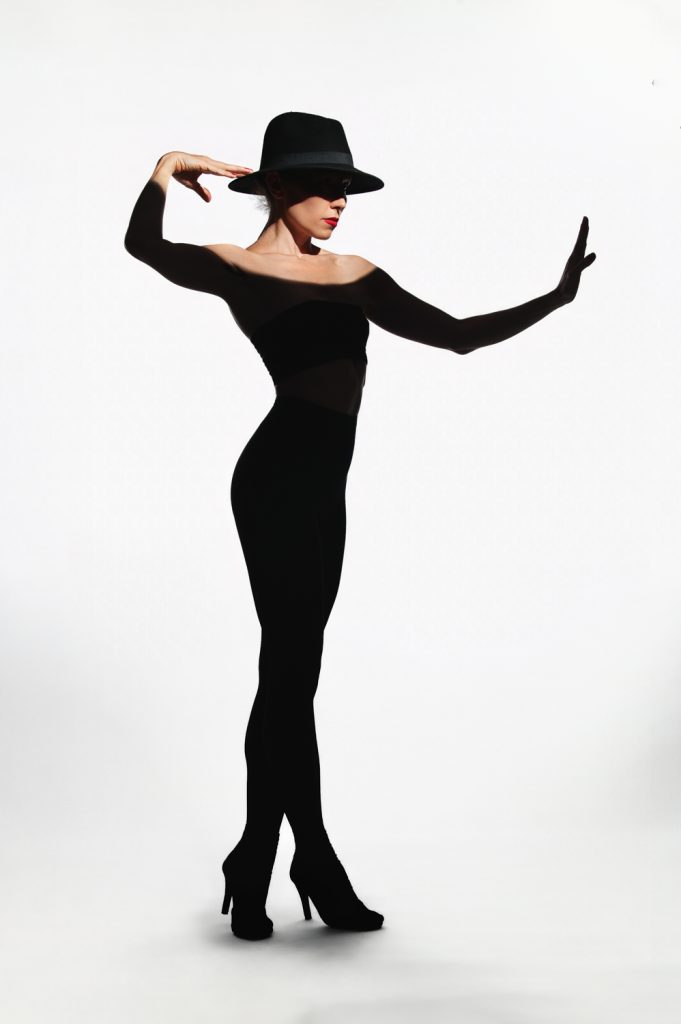
  • The Shadow Dress

    The Shadow Dress

    It isn’t made of fancy cloth,
    but of emptiness sewn tight,
    a line drawn clean between
    what yearns to be seen
    and what hides, in the dark.

    It is made of
    silence,
    and silence
    is the loudest thing of all.

    Surely they will hear me now.

    It carries my refusal,
    my defiance,
    my secret vow to outlast
    the hour, the season,
    those who pretend not to wish me away.

    So I made it out of
    absence,
    too pretentious to be ignored.

    Surely they will see me now.

    Of all the masks I’ve worn for them, 
    this one is truest yet.
    It shows the parts I want them to see,
    without betraying myself.

    It is made of 
    nothingness,
    vulgar, illustrious, obscene.

    Surely they will love me now?

    I wear this for all the times I wanted to be known.
    Now you get to fill in the blanks.

    But this time, on my terms.


  • Let’s Talk About Hard Light: The Beauty Dish

    Let’s Talk About Hard Light: The Beauty Dish

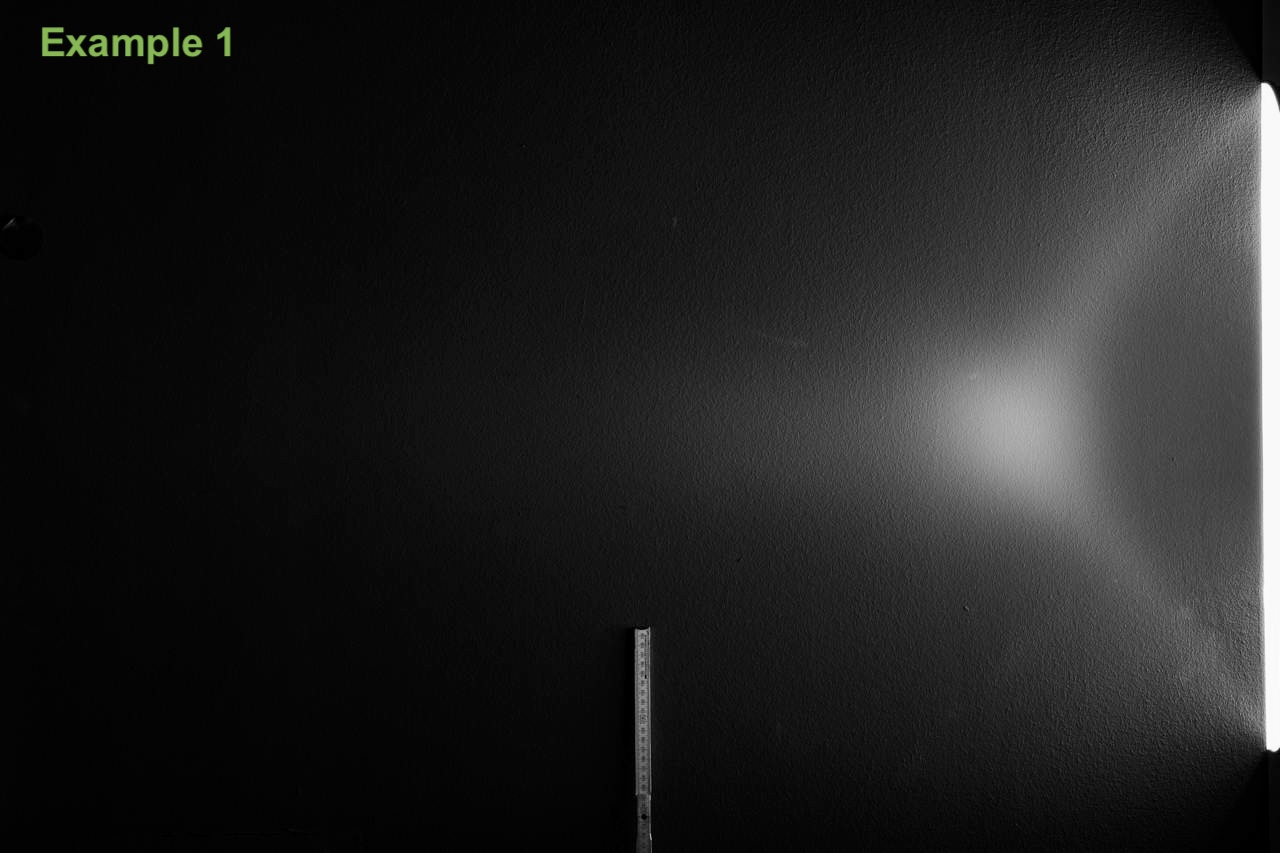
    If you look closely at the beam pattern in Example 1, you’ll see something you would never notice while working with it. It is not one light source, it is two.

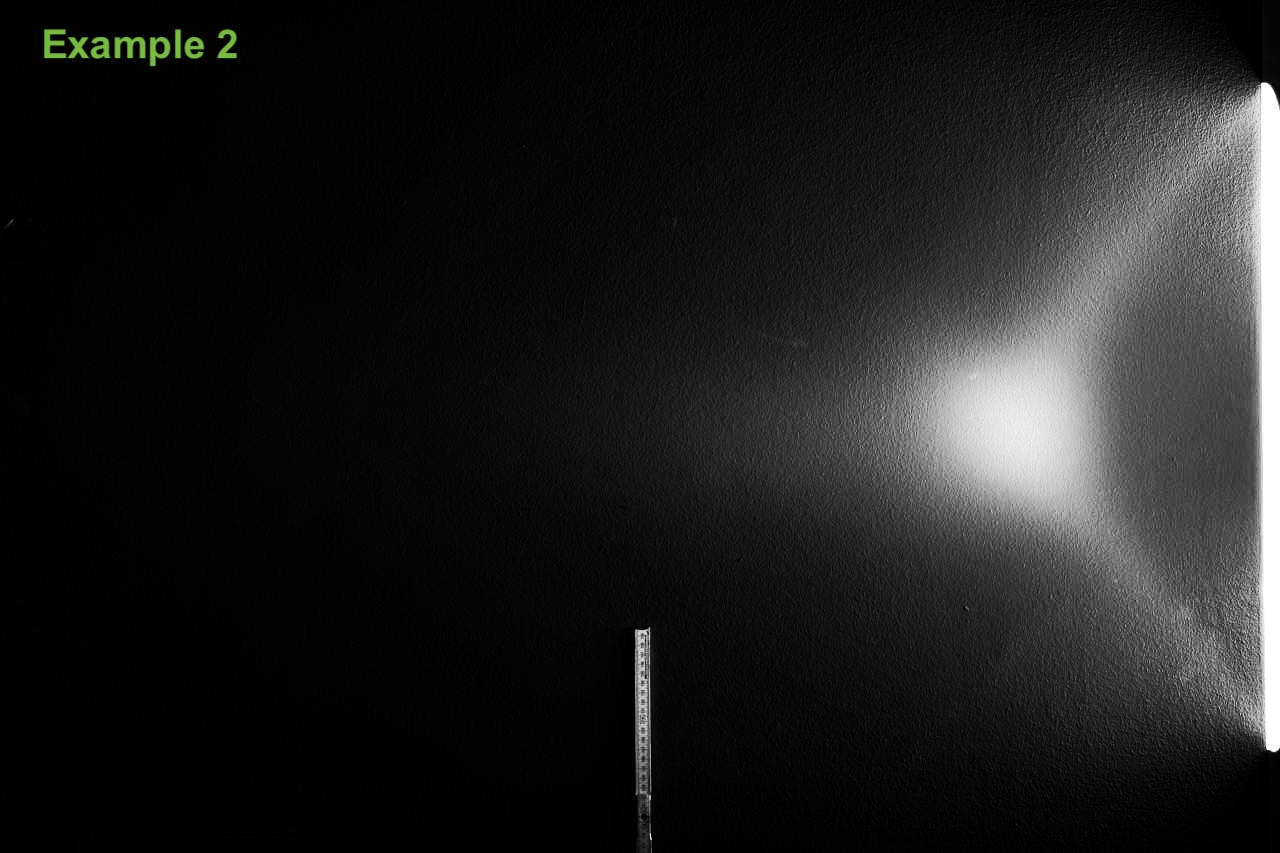
    In Example 2, you can see the same pattern with increased contrast.

    In the center, there is a tight, focused beam that behaves like a hard source. Around it, a softer, scattered halo that wraps and fills. That combination is what gives the beauty dish its unique look: crisp edges, deep shadow control, and smooth falloff all at once.

    The bright core in the middle is formed by light that first strikes the central deflector disc and is then reflected cleanly from the parabolic surface toward the subject. These rays follow the shortest and most direct optical path, remaining largely specular and concentrated along the central axis. Because they have undergone only one major redirection, they behave like a small, hard source that creates crisp edges and strong definition.

    The softer outer glow comes from light that takes longer and more complex paths, bouncing multiple times within the dish cavity or reflecting from the edges at steeper angles. Each additional interaction scatters the rays slightly, broadening the apparent size of the source and reducing contrast. This scattered component wraps around the subject, softening the shadow transitions and adding subtle fill.

    Together, these two behaviors, the specular core and the diffuse halo, form the beauty dish’s signature character: contrast with forgiveness.

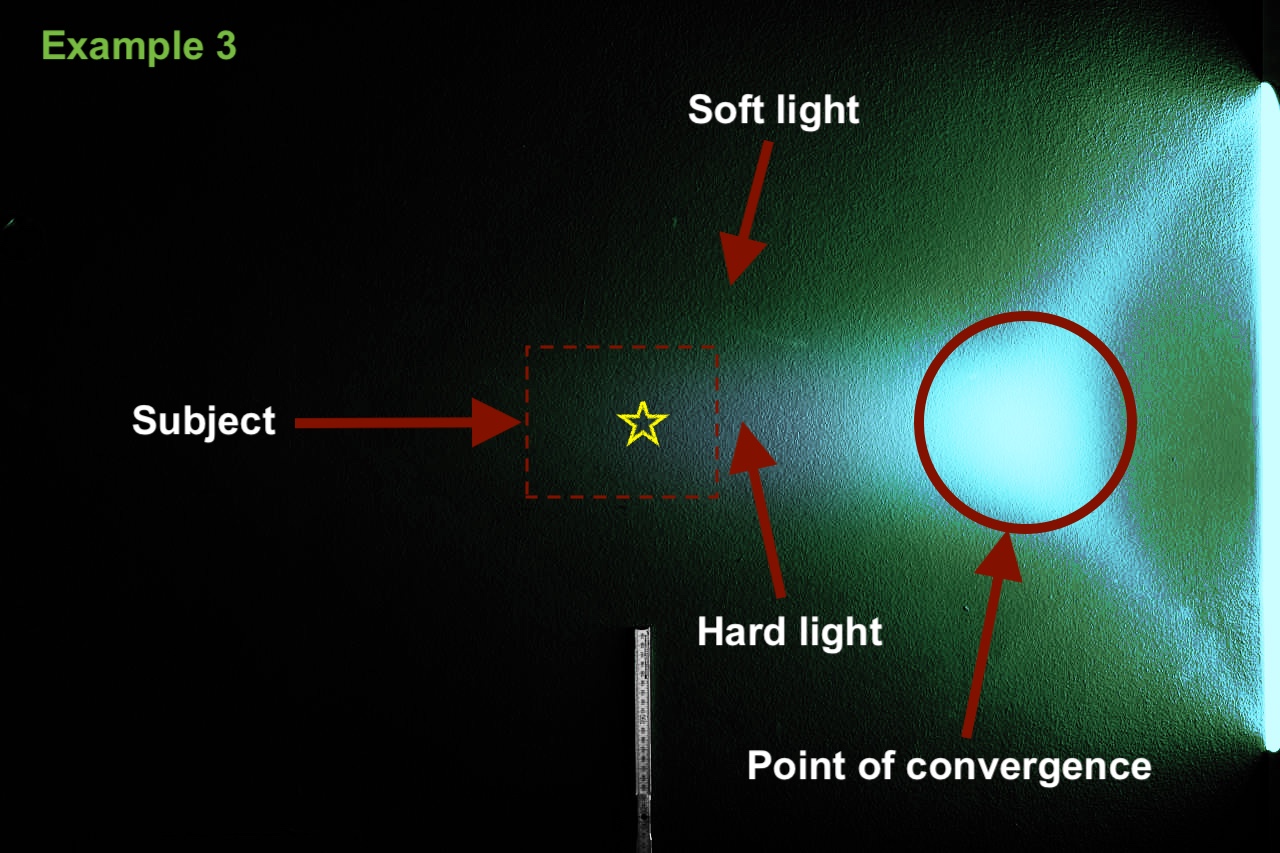
    If it were possible to isolate just the center beam, it would behave like a small reflector or even a snoot. If you could isolate only the outer spill, it would behave like a large, diffuse source, as shown in Example 3. The beauty dish merges both behaviors into a single pattern.

    (Note: There are two main types of beauty dish, silver and white, and a range of accessories such as grids and diffusion socks. In this post, I am referring specifically to a silver beauty dish without accessories.)

    How to Use It

    The best way to position a beauty dish for portraits is just above the subject, angled down at roughly 45 degrees. I usually place it so the lower edge is barely out of frame. This gives me beautiful half-moon catchlights in the eyes, but the exact angle depends on where you want the shadows to fall.

    Set the modeling light to 100%. This allows you to see exactly how the shadows fall as you adjust height and angle. You are composing for shadow placement at first, not for light coverage. The strong modeling light also contracts the model’s pupils, revealing more iris and giving the eyes more life in the final image.

    The sweet spot, the optimal distance, sits roughly one dish diameter away from your subject (see Example 3). That is not a rule, just a reliable starting point. At that distance, the dish’s apparent size and the balance between specular and scattered rays are in harmony.

    Closer, within the sweet spot, the larger apparent size of the dish produces a soft, broad glow. Farther, the dish’s apparent size shrinks, the hard core dominates, and the overall light becomes more contrasty.

    Although rules are meant to be broken, avoid placing the dish so close that the face falls within the point of convergence, where the triangular beam narrows to its tip. Any distance beyond that point is usable, and within a window of about 5 to 10 centimeters, each small adjustment produces a distinct light quality.

    Now that you have seen how the light behaves in the example images, keep them as reference. For many photographers, this is the missing puzzle piece that makes the beauty dish predictable. You will never be able to unsee that triangular beam again.

    Bring in a model and make test shots. Compose for shadow shape at first, not brightness. Try different distances and power levels. Experiment with slightly underexposed, correctly exposed, and overexposed frames. Adjusting the highlights slider down in your photo editor will reduce diffuse light, making specular highlights more pronounced, and vice versa. I find my camera gives me better control over these nuances when I slightly underexpose.

    A beauty dish is not a soft light, and it is not a hard light. It is both, two light behaviors in one, defined by geometry and physics, not magic.


  • Let’s Talk About Hard Light

    Let’s Talk About Hard Light

    I’m starting a short series on hard light sources, a subject that tends to divide photographers into two camps: those who fear it and those who study it.

    Over the next few posts, I’ll break down how different modifiers shape specular highlights and contrast: beauty dish, standard reflector, optical spot, soft box, and mixing hard and soft light sources.

    This isn’t a class. It’s an exploration of how I use light in my own work and what I’ve learned about controlling it through understanding, not luck.

    Hard Light Sources: Intimidating but Predictable

    Hard light scares people because it demands comprehension. With a giant soft source, you can stop thinking. The shadows are forgiving, the transitions gentle, the mistakes invisible.

    Hard light exposes everything, including your lack of understanding. But it isn’t difficult. It’s misunderstood.

    Once you know what governs it, it becomes the most obedient kind of light you can use. It follows rules: geometry, distance, angle, surface. Nothing more, nothing less.

    What Makes Light Hard

    Light is hard when the size of the light source relative to the subject is small. That’s all it is. Geometry, not magic.

    Think of the sun. It’s unimaginably large, but because it’s so far away, it appears tiny in the sky. A small light source relative to us. That’s why sunlight casts sharp shadows and clean edges. If you could bring the sun close enough to fill half your sky, the same light would turn soft and wrap around everything.

    The same rule applies in the studio. A small source, or one placed far away, sends light from a narrow range of angles, creating defined shadows and crisp specular highlights. A large source, or a small one placed close, sends light from many directions at once, filling its own shadows and softening the edges.

    Hardness isn’t about power or brightness. It’s about geometry and distance. Move a light back and it becomes smaller relative to the subject, harder. Bring it closer and it becomes larger, softer.

    Modifiers don’t make light hard by name. A beauty dish, a reflector, even a bare bulb, only shape how the beam spreads. What defines hardness is the ratio between source size and subject distance.

    Once you understand that, you stop guessing and start designing.

    Why I Love It

    What draws me to hard light are specular highlights, those crisp, bright reflections that show exactly what your light is doing. They’re not random white spots; they’re the mirror image of your modifier, printed on the skin.

    If the highlight is large and soft edged, your source is large and close. If it’s small and sharp, your source is small or distant. When you learn to read them, you can diagnose any setup from a single frame.

    Specular highlights are the truth tellers of light. They reveal shape, angle, and polish. They turn lighting from guesswork into engineering.

    The Physics in Simple Terms

    Every illuminated surface returns light in two ways.

    Specular reflection: light bouncing off the surface layer, like a mirror.
    Diffuse reflection: light that penetrates, scatters, and exits, carrying the surface color.

    Human skin does both. The thin layer of oil and moisture on the epidermis acts as a mirror, creating those crisp, controlled highlights. The tissue beneath scatters light softly, creating the warm, colored base tone.

    The balance between the two defines how glossy, sculpted, or matte the skin appears.

    Hard light exaggerates that difference. The highlights become architectural, the transitions deliberate, the shadows precise.

    Hard light isn’t difficult. It’s simply unforgiving of confusion and rewarding of clarity. Once you understand its physics, you can make it do exactly what you want.

    In the next post we’ll talk about the beauty dish. Theres nothing like it. I will break down the physics, expose and visualize the secret geometry few people have seen, and make it a predictable tool in your hands. 


  • Deal With It⁣⁣

    Deal With It⁣⁣

    In a world saturated with superficial beauty, this piece rebels against the status quo. This isn’t about becoming, it’s about being. She’s not here for you. She’s here despite you.⁣⁣

    This is a confrontation cloaked in elegance. The subject isn’t asking to be admired, she doesn’t invite the viewer in. She already owns them. With self-evident knowing, she challenges the passive role so often assigned to feminine beauty. She’s not decorated, not dressed to impress. Her eyes, lit by a strip of surgical light, do not seduce. They assess. They evaluate. They invoke.⁣⁣

    Every element here serves a singular purpose: to declare. This is not beauty for consumption. It is not vulnerability dressed in rouge. It is strength in stillness. Power in being. Nothing more, nothing less.⁣⁣

    Deal with it…⁣


  • Beauty is in the Eye of the Beholder⁣?

    Beauty is in the Eye of the Beholder⁣?

    Whenever you hear that phrase, chances are someone is trying to settle a matter. They’re trying to disqualify all critique and escape scrutiny by implying that beauty is subjective, a matter of taste. But is it really? In this essay, I want to break this phrase down and then revisit it from a different perspective.⁣⁣

    What even is beauty?⁣⁣

    Beauty has long been described as qualities that please the aesthetic senses. But in philosophy, beauty has long been understood as more than a sensory pleasure. Plato, in The Symposium and The Republic, linked beauty to the eternal Forms: the Good and the True. For him, beauty was not just about aesthetics but a pathway to perfection, a visible trace of what is highest and most true. Ugliness, on the other hand, was not simply unattractive but distorted, a deviation from the real, a visible untruth. And therefore, a lie.⁣⁣

    In The Republic, Plato even warned that art which misrepresents or deceives (mimesis) is a kind of ugliness, because it obscures truth. To present distortion as reality is to lead the soul away from the Forms. Beauty, then, was not subjective taste but an ethical and metaphysical concern: a bridge between perception and truth.⁣⁣

    While Plato framed beauty as a pathway to eternal truth, later thinkers and poets carried this idea forward in their own language. Centuries later, John Keats famously stated “Beauty is truth, truth beauty.” This suggests a deep connection between the aesthetic experience and the nature of reality itself. The claim implies that beauty, in its purest form, can reveal profound truths about the world and ourselves. Keats presents this as a fundamental concept, stating it is “all ye know on earth, and all ye need to know.” Not all thinkers agree, Kant, for example, separated aesthetic judgment from both logic and ethics. Still, the conviction that beauty discloses truth has endured, and it is this tradition I lean into here.⁣⁣

    This raises the question of truth itself. Truth is often understood as correspondence with reality, though philosophers have offered other accounts, from coherence to pragmatic theories. For our purposes here, let’s stay with correspondence, because it anchors truth to something outside our opinions.⁣⁣

    But philosophy alone does not settle the question. Our human perception complicates this ideal, urging us to reconsider how we actually experience beauty.⁣⁣

    Now let’s start over.⁣⁣

    Let’s indulge the broader more philosophical perspective for a moment and assume beauty is synonymous with truth. Truth is generally defined as correspondence with reality. And reality is the state of things as they actually exist, whether we recognize them or not. Which makes truth, at its core, objective, NOT subjective. This would imply that beauty is something that cannot be reduced to mere opinion.⁣⁣

    Yet beauty is still observed, and observation is flawed. The human eye doesn’t simply see, it interprets. And interpretation is limited by experience. Sometimes we miss what is in front of us simply because we have not yet lived enough to see it.⁣⁣

    So maybe “beauty is in the eye of the beholder” doesn’t mean beauty is whatever we choose to call it. Maybe it means that the ability to recognize beauty depends on what is in us. That in order to perceive beauty in the world, we must already hold some measure of it inside ourselves. That our ability to recognize beauty is proportional to the measure of truth we hold.⁣⁣

    And if this is the case, then yes, beauty IS indeed in the eye of the beholder. But when someone drops that line with the intention of settling a matter, I often respond with the phrase: “then so too must be the absence thereof.” And if you’ve ever heard me say that, now you know what I mean.⁣⁣

    Increase your measure⁣⁣

    Creating anything is a powerful act. It is godlike to take a thought or an idea and manifest it into the world. As artists, we begin with limited experience. We start with only a small measure of beauty. At first we love everything we create, and we love it simply because it exists, because we could make it.⁣⁣

    But over time, we look back and hate many of our creations. Not because they were worthless, but because our measure has grown. The more we create, the more experience refines us. Layer by layer, the onion is peeled back from our eyes, revealing new depth, new nuance, new meaning. We begin to see more than we once could.⁣⁣

    And yet, when critiqued by someone else, we feel pain. We internalize disapproval and reject it. We defend ourselves with the familiar phrase: “Beauty is in the eye of the beholder.” We say it in order to liberate ourselves from the pain. But I want to offer another perspective. As artists, our objective should be to increase the measure of beauty we hold. And to remember that anyone who critiques our work does so with the measure they hold.⁣⁣

    Our measure of beauty grows through experience, reflection, and the willingness to see through another’s eyes. Each act of creation or encounter with critique adds to it, if we let it.⁣⁣

    So the first response should be this: try to see through their eyes. Validate their assessment before you react. When you share your work, already brace for the sting. Slow down and let it pass before you react. Ask questions that will help you better understand their perception. Sometimes you will find they possess a smaller measure than you do. They cannot recognize your intent. This is your chance to share your measure of beauty with them, if they are able to receive it. Remember, it takes a measure of beauty to recognize it in another. And that goes for you too. Others may hold a measure you do not yet have. And the moment you allow yourself to see what they see, their measure becomes yours. And no one will ever be able to take that away.⁣⁣

    So the next time you feel that sting of critique, ask yourself: “do I have the measure to see theirs, or do they have the measure to see mine?” These are not easy questions. It takes a measure of beauty to ask them, and a measure to answer them. It takes time, humility, restraint, reflection, introspection, and extrospection. When tied together, these become virtue, a beauty in and of itself. This is why I believe the very act of being conscious of this, and intentional about this, will automatically increase your measure.⁣⁣

    I would like this phrase not to be used to shut the door, but to open one. Not as armor against critique or a curtain hiding our growth, but as a challenge: to expand our measure, to seek what others see, and to share what we see with them. Each act of creation, each moment of reflection, is a chance to increase your measure of beauty, by striving to understand not only the world as it is, but also the eyes that gaze upon it. Progress, humility, and connection are themselves acts of beauty. And in reaching for a greater measure, you may discover that beauty lies not only in your eye, but in your openness, your willingness to see anew. That, in the end, is all any of us can truly hold, and all we need to know.⁣⁣


  • Pretty Isn’t Modeling – Stop chasing pretty. Start chasing iconic

    Pretty Isn’t Modeling – Stop chasing pretty. Start chasing iconic

    ⁣Almost every model starts in the same place: total reliance on the photographer’s cues.⁣⁣

    Where do I put my hands?

    Should I look at the camera?

    What do I do with my face?

    That’s normal. That’s where everyone begins. Over time, most models build their first “defaults.” The three or four poses they can slip into without thinking. Chin up, dreamy eyes, parted lips. The “pretty girl face.”⁣⁣

    Those defaults are not wrong. They’re the first layer of a script. Every professional model needs a set of recallable moves, the same way a dancer knows steps or an actor knows lines. But here’s the problem: that’s not modeling. That’s Instagram influencer at best. That’s the look that attracts hobbyists. And if that’s all you’ve got in your toolkit, you’re not reaching for the stars. Those scripts are supposed to be a foundation, not a cage. They need to be cultivated like a garden, not repeated like a broken record.⁣⁣

    Real modeling is about:⁣⁣

    Shapes: the body as sculpture.⁣

    Tension: holding energy inside the frame.⁣

    Lines: using arms, spine, and angles as design.⁣

    Mystery: what you hide is as powerful as what you show.⁣

    Character: the courage to be deeply yourself, and the skill to become someone else.⁣⁣

    The industry doesn’t need another girl who knows how to look vacant and “ethereal.” It needs someone who can turn her body into sculpture, someone who can conceal as powerfully as she reveals. Someone who can snap from raw intensity to resting bitch face in the space of a shutter click.⁣⁣

    It’s easy to get stuck in the first default script that impresses others and makes you feel confident. But I’m here to disrupt that confidence. I want you to rebuild it. I want to put you back in that place you were when you built that first script and encourage you to expand it. It’s going to make you feel insecure at first. But you got this far, and you will level up.⁣⁣ Many models never reach that point where they build a script at all. You’ve managed to push into it, and you will manage to push beyond it.

    Here’s the truth: glamour pop drama on autopilot might impress your friends. But if you think it’s going to impress an agency, a casting director, or a magazine editor, you’re already losing. The camera sees through habits. It doesn’t reward autopilot. It rewards presence. You being fully alive in your body, every inch of it.⁣⁣

    So if you’re serious about modeling as a career, stop recycling the same three moves. Every time you do, you’re not in control, your habits are. Throw them out. Ban yourself from using them. Then see what’s left. Safe gets you nowhere in this business. And that goes for both of us. We work hard to build something that feels like our own. But if we don’t kick it and build it higher, we won’t last. Anyone can use a camera. And with practice, anyone can light a subject. And there’s always someone prettier, and with practice anyone can pose. We have to throw everything away and start over. Over and over again. Make ourselves unpredictable, and unforgettable. And when we manage to develop a recognizable consistency within that storm, now that’s the raw material of iconic. ⁣⁣

    Practice like an athlete.⁣⁣

    Pick a Vogue Paris spread. Copy every single pose in the mirror. Yes, even the ugly ones. Especially the ugly ones. If it feels sexy, chances are it looks cliché. If it feels unnatural and awkward, you’re in the arena of iconic. Learn where your hands belong, and more importantly, where they don’t. A hand with stiff fingers on your own body will never read as natural.⁣⁣

    Stop chasing “pretty.” Pretty isn’t art. Pretty isn’t fashion. Pretty is safe. And safe is boring. Study the models who broke the industry: Kate Moss, Kristen McMenamy, Naomi Campbell, Saskia de Brauw. None of them survived by being merely beautiful. They survived by being singular.⁣⁣

    When you step in front of my lens, don’t give me “pretty.” Give me form. Give me shapes. Give me concealment. Give me defiance. Take control. Show me that you’re more than habits. Show me that you can create something only you can make.⁣⁣

    Because modeling isn’t about looking good.

    It’s about making us look twice.⁣⁣


  • TFP Detox: A Field Guide for Photographers Who’ve Wandered Too Far into the Berliner TFP Jungle

    TFP stands for Time for Print (or sometimes Trade for Print/Photos). It’s a type of collaboration where no money changes hands. The model, photographer, and sometimes other creatives (MUAs, stylists) all contribute their time and skills, and everyone walks away with photos for their portfolio or social media.

    In many cities, TFP culture reflects the vibe of the place. And inside that culture lives a sub-species of model I’ll call the TFP serial collaborator.

    The first time you meet one, it feels harmless. You’re scrolling Instagram, spot a model with a few thousand followers, a nice smile, and some decent shots. You follow her. You start sketching ideas in your head. 

    Then you start noticing something odd. Photographer after photographer you know has her in their portfolio. Like, every one of them. 

    You go back to her feed and start scrolling deeper. She looks great, sure, but the images start to blur together. Hundreds, sometimes thousands of them, each somehow identical in tone and feel. You check the tags and realise: these are actually different photographers. Many different photographers. Yet they all look like they came from the same photographer.

    And then it hits you, these are not the photographers’ images. This is HER body of work. The photographers have been reduced to a kind of human photo booth, each doing their turn at the same production line.

    Before you know it, you’re at risk of joining the long line of hopefuls making their own “unique” contribution to the stack of 600 near-identical portraits taken by 200 different photographers, all convinced they’ve “captured her essence.”

    Welcome to the world of the TFP serial collaborator. 

    What exactly is a TFP serial collaborator?

    A TFP serial collaborator doesn’t build a portfolio, they build a museum of themselves. Hundreds, sometimes thousands of images across every style, every photographer, every backdrop. It’s not about whether they’re good or bad at modeling. It’s about output and volume. The goal isn’t curation. It’s constant novelty.

    Their diet is simple: likes, validation, and just one more shoot in the perpetual search for the next dopamine hit. Their habitat: rooftops, cobblestone back alleys, abandoned U-Bahn entrances, anything with a mural. Their repertoire: endlessly recycled poses, the same arched back, the same angles repeated across every photographer’s feed. Their social circle: other serial collaborators. They follow each other, try to one-up each other in “number of shoots this month,” and post new work so often you’d think it was a competitive sport.

    It’s not just Berlin

    Berlin just gives it a certain flavor. The nightlife mythology, the club kids who double as “artists,” the “we’re all here for the culture” talk that covers the fact that most of it is merely self-promotion. It’s RAW here, less glossy, and a little more chaotic than in other places.

    But the subculture exists everywhere. In London, it’s rooftop influencers in fast fashion threads. In LA, it’s hyper-polished Instagram shoots at rented houses with infinity pools. In Tokyo, it’s Harajuku style icons doing two dozen street shoots a week. In New York, it’s gritty, subway-lit portraits with everyone claiming they “just found each other on the street.”

    The constant is the same: a closed loop of familiar faces, endlessly reinterpreted in ways that all start to look the same.

    Why it matters if you’re a photographer

    Serial collaborators often have surprisingly big audiences. Mostly other models, photographers, stylists, makeup artists, and sometimes even clients. If you manage to give them something that looks nothing like the rest of their feed, you stand out immediately. They post it, their network sees it, and suddenly you’re “the one who made her look like she belongs in a magazine.”

    But you can’t just show up and wing it. You have to step in as a creative director. Not in a suffocating way, but in a way that feels liberating and exciting for the model. You set the tone, you set the pace, you know exactly what you’re trying to make. Without that, you’ll get swept into their routine and leave with the same shots every other photographer has taken.

    Survival Strategy

    Think of it like stepping into a high-traffic wildlife reserve. There’s movement everywhere, noise in every direction, but your job is to stay locked on the one shot that matters.

    • Control the shoot before it starts
      Lock the concept before you meet. If you keep it open, you’ll end up shooting HER script, not yours.
    • Approve or style the wardrobe yourself
      Nothing derails a shoot faster than a suitcase full of fast-fashion randomness. Lock in styling before the day.
    • Keep it tight
      Have a shot list or set a hard start/stop time. Open-ended shoots are a magnet for drift.
    • Stop the freestyle takeover
      Never let the model hijack the session. You might need to direct more than usual to keep boundaries clear.
    • Deliver small
      World-class photographers often deliver 1–2 shots per look on a TFP shoot. In Berlin, pros might give 2–4. A serial collaborator will happily take 99.5% of what you shoot if you let them. Don’t.

    The unexpected benefits

    When you do this right, you’re not just making one strong image. You’re planting it right in the middle of a network where everyone knows the face. The serial collaborator’s followers are used to seeing her shot by average photographers. When your version drops, it’s a shock. People DM her asking who shot it. She tags you. And now you’re on the radar as the one who can turn a familiar face into a statement piece.

    And here’s something most people overlook, these models are often absolute GOLD! Often more versatile than many pros. They’ve stood in front of more lenses than most working models will in their careers. They’re less fearful, more bold, more willing to try new things. Just like the advice often given to photographers “shoot every day”, they’ve been living that ethos. The sheer volume of their experience means that if you bring them a clear concept and real direction, they can deliver in ways that may surprise you.

    This isn’t just about ego. It’s about positioning. In a city where mediocrity spreads fast, showing you can pull something real out of the most overexposed subjects says you can handle anything.

    Dear TFP serial collaborator

    If you’re a model caught in this cycle, you can flip it too.

    I know you’re used to steering the ship. But imagine you had a shoot with Helmut Newton. Do you think you’d be calling the shots, choosing your favorite angles, taking home every frame? No, you’d be working inside HIS vision. And that’s the point. Work with photographers who actually direct you. Stop collecting endless variations of what you already have. That grind might feel productive, but it’s just more of the same.

    The photographers with real vision are the ones who will give you images that open doors. If you want to go from “Berlin collab jungle” to serious modeling, the detox starts with saying no to shoots that don’t move you forward. If you have to run the show just to make it work, you’re working with the wrong photographer.

    Follow editorial work. Examine the poses, practice them in front of a mirror. More often than not, if you feel beautiful doing the pose, it’s cliché. If it feels awkward and unnatural, that’s usually the sweet spot: the moment something unique and expressive starts to happen.

    Here’s a trick; start a second Instagram profile and don’t link it to your main. Curate only the best of the best. Not the shots where you like your hair or think you look pretty, but the ones with real weight and soul as photographs. Don’t trust only your own eye for this; ask a few strong photographers to help. At first, you won’t see the difference between “nice” and “world-class”, it takes time for your eyes to adjust to that kind of nuance. Make a rule for yourself, never post more than 18 photos on this profile. If you get a new stronger image in, throw the weakest one out.

    Then start approaching better photographers with that second account. Look for conceptual consistency, creativity, and versatility. And never look desperate. 

    If you do this, you’re fighting fire with fire. Speaking the same language good photographers speak. This is exactly how they curate their work. The difference is, now you’re curating yourself with the same precision. And once you do, the conversation changes. Give it time, and you’ll find yourself in a completely different world. One where quality and refinement are the standard, not the exception.

    Closing the loop

    The serial collaborator scene is loud, constant, and full of low-effort repetition. But it’s also an opportunity. If you walk in with boundaries, shoot on your terms, and only release work that looks like YOURS, you can tap into the same network that swallows most photographers whole.

    In the TFP jungle, everyone has a camera. The one who survives has a vision.

  • When Flow Becomes Home: Transient Hypofrontality as a Neurodivergent Default

    When Flow Becomes Home: Transient Hypofrontality as a Neurodivergent Default

    Steven Kotler calls flow a peak state: a mode of consciousness where the sense of self fades, time distorts, and creativity surges. He’s not wrong. But like most mainstream interpretations, his version of flow is built on an assumption, that all brains are wired the same. That flow is something people enter, then exit.
    For some of us, it’s something we live in.

    For me, flow wasn’t a temporary high. It was my default mode. It was safety. It was home. And I miss it more than I’m comfortable admitting.

    This isn’t the typical flow state you hear about in self-help videos. I’m neurodivergent, and for people like me, what Kotler calls “flow” can be something far deeper, and more dangerous.

    How It Started

    I found this state as a child, not through mindfulness or peak performance, but through trauma.

    I grew up in an emotionally distant home. I was bullied in school. Social interaction was unpredictable, often cruel, and never within my control. But inside a task, inside a project, I had control. Not over others, but over focus. Over time. Over my own perception.

    I taught myself to code long before I understood what coding was. I reverse-engineered dumb musical instruments and made them speak MIDI. I designed LED shoes that lit up when you walked, years before they hit stores. I built hand fans like the ones you now see at football stadiums.

    But it wasn’t just machines.

    People often assume I’m mechanical because of how I think. They assume I only build systems. What they miss is that I also composed classical music. One of those pieces, November Morning, began as an electronic track by Martin Stimming. I made a classical interpretation that was later performed by a full orchestra, the Brandenburgisches Staatsorchester in Frankfurt an der Oder, without a single sampler involved. It became a human, breathing thing. That piece was reviewed by groove magazine, not as a novelty crossover, but as a legitimate orchestral work, emotionally rich and fully realized. And yet, to me, composing it came from the same place as building circuits: flow.

    I’ve been called a genius more than once. But that’s not true. I’m not a genius. I’m not even particularly smart. I just disappear into systems in a way that most people can’t. I’ve met actual geniuses, and I can’t relate to them at all. I don’t improvise brilliance. I don’t dazzle in conversation. I suck at math. My strength is not intelligence, it’s depth. I go in and I don’t come out until the thing is finished or I fall apart.

    I also draw hyperrealistically in charcoal, using dust and friction instead of algorithms. And I work in photography, not the kind that documents, but the kind that searches for something beneath the surface of light and expression.

    The state I lived in, this deep, silent tunnel of attention, wasn’t a denial of creativity. It was the place I accessed it. It was my method for finding not just structure, but meaning.

    The Machine That Couldn’t Be Owned

    When I reached adulthood, this state followed me into work. It didn’t always serve me well.

    I was often poached by company owners who wanted to use me. They were drawn to what I could do, but frustrated by the fact that they couldn’t read me, manage me, or control me. I didn’t play social games. I didn’t attend to hierarchy. I didn’t signal deference. I just worked, relentlessly, quietly, and often invisibly. That intimidated people.

    The friction wasn’t just external. In these states, I didn’t have access to my emotional value system. I couldn’t regulate. I was reactive when interrupted. I spoke without filters. I offended people. I caused harm.

    And afterward, I’d have to apologize, sometimes without even understanding what I had done. Because in those moments, I wasn’t really there. The prefrontal cortex, the seat of morality, time awareness, self-monitoring, was offline. That’s what transient hypofrontality is. But when that state stretches over weeks, or months, or years, it shapes your character in ways you can’t fully see until you emerge.

    The Body Forgotten

    From the outside, I must have looked like a zombie.

    People saw output, but they didn’t see what it cost. In deeper states, my physical needs simply vanished. I would sit on my leg until it went numb, and stay there, unmoved, unaware, untouched by pain. I’d forget to eat. Forget to drink. I’d go without water until I was sick. Not out of neglect, but because the project had already resumed by the time I woke up. My body wasn’t part of the loop.

    Hygiene declined. Sleep dissolved. The project continued on its own while the rest of me dissolved into it.

    And relationships? They deteriorated too. I’ve always found it hard to maintain social connections, even outside flow. But inside it, I became oblivious to the warning signs. The silences that grew. The emotional tensions I didn’t notice until they exploded. I didn’t withdraw to be unkind. I just didn’t register that others existed in that space. Not as living, feeling people with limits. Only as background noise to be navigated or tuned out.

    That state made me functionally blind to the very systems that keep a person alive: body, community, reflection.

    When I Became Human Again

    The turning point was fatherhood.

    Becoming a single parent to my son, who is also neurodivergent, shattered the conditions that allowed me to live in flow. He needed me, present, responsive, emotionally attuned. He interrupted. Constantly. And slowly, painfully, the systems I had shut down began to come back online.

    We share a brain culture, though our expressions of it differ. I’ve come to see that what I once thought was just “how I work” was actually a neurodivergent survival strategy, one that mimicked genius and hid distress in plain sight.

    I began to feel time again. I became aware of my values. I heard my internal voice, not the calm analytical one, but the vulnerable, contradictory one I had buried long ago.

    I became human again. But not without grief.

    The machine-state, for all its dysfunctions, had given me consistency. Peace. Focus. It had insulated me from overwhelm by narrowing my world to a single point of control. Losing that left me raw. Exposed. And I still long for it, more than I should.

    A Note to Steven Kotler

    Stephen, if you ever read this: your work helped me name something I lived in for decades. But I need to say this as clearly as possible, flow doesn’t land the same for all of us.

    For some, it’s not a hack. It’s a coping mechanism. It’s not an optimization. It’s dissociation with a productivity wrapper. You describe transient hypofrontality as a peak. But what if it’s actually a refuge for some? What if some of us didn’t learn to enter that state, but rather, we learned to live there because we couldn’t survive anywhere else?

    And when we finally leave it, not because we chose to, but because life demanded it, we don’t feel liberated. We feel bereft.

    That’s the cost of building a self inside a system that never asked for one.

    I still feel that state. Every day. It’s always there, just beneath the surface. I don’t need any special ritual to access it. I don’t have to chase it or induce it. All I have to do is stop resisting, even slightly, and it takes over. It’s still my nervous system’s default. The only difference now is that I manage it, consciously, at the level of thought, because I finally understand the price of letting it run my life.


  • A picture is worth a thousand words?

    A picture is worth a thousand words?

    They say a picture is worth a thousand words. But it’s more than just words. Frozen in time is a whole universe, encapsulated within the subject. Their vision of themselves. Their ambitions, dreams, hopes and fears. Whatever moves them, whatever they want to see reflected when they look at the final photo. Even how much sleep they got, or how hydrated they are.

    But it’s also a snapshot of my relationship with them. Everything we exchanged before the shutter clicked – verbal, nonverbal, emotional. There’s a quiet choreography in the shared intent: my desire to create something they’ll love, their desire to give me something worthy to capture.

    It’s a mutually vulnerable space. A resonance chamber. I feel every nuance of their emotional flow as if it were my own. That empathy shapes my work. As I internalize and regulate what I feel from them, they begin to co-regulate. That emotional loop becomes part of the creative current that leads to the final image.

    Whatever happens in that space is real. It’s truth. Our shared truth in that moment.

    A picture isn’t a thousand words. It’s a thousand parallel universes, frozen in time. And no one else who sees the image will ever access them the way we can. But they’ll sense it. They’ll feel the hum beneath the surface. Like the fading impression of a dream.